
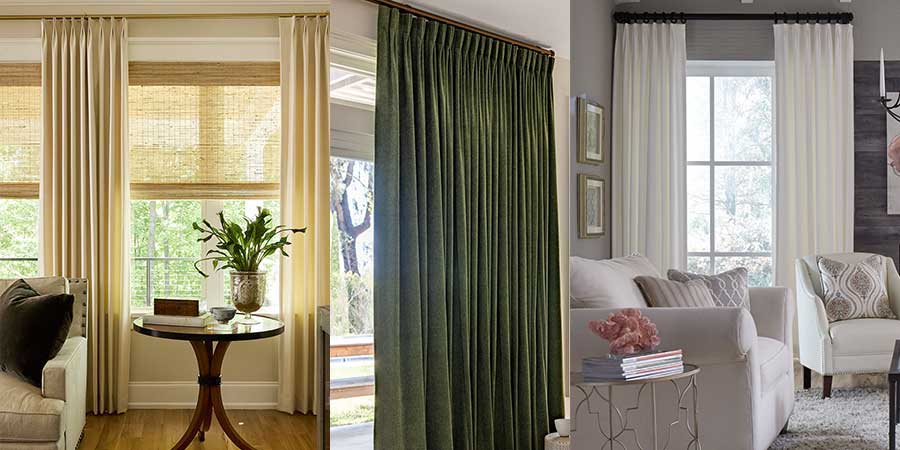
Custom drapery makes a statement at the window–a statement of style and atmosphere. Draperies are a beautiful way to add dimension at the window while also enhancing the light control, privacy and energy efficiency of the space. Pinch pleat drapery is an elegant choice, tailored for gorgeous design. Come with us as we explore this popular header style for custom window treatments.
What is pinch pleat drapery?
“Pinch pleat” describes the header style, or how the top of custom draperies is finished. The name originates from fabrics being pinched together and sewn with those “stitched-in” pleats in place, typically 1-2 inches down from the very top of the fabric. The permanent gathers create a structured pleat that performs well as the drapes are adjusted open and closed.
Is pinch pleat drapery traditional or modern?
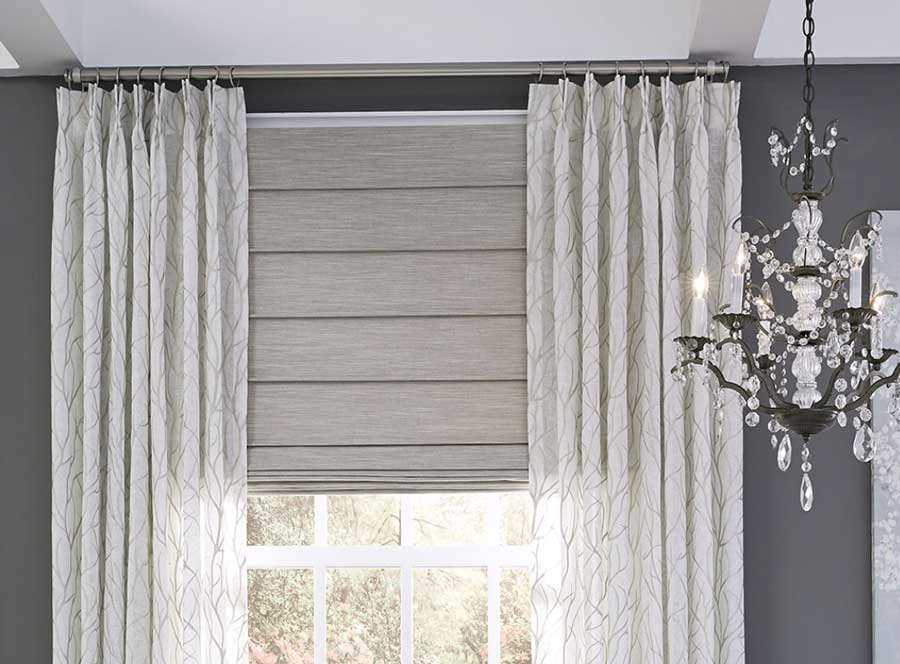
Pinch pleat drapery is considered a contemporary style of window treatment with timeless results. This means that pinch pleat draperies can transcend a number of current design styles, from traditional to modern, and from farmhouse to coastal. It’s not just the header style that determines the overall look. There are a number of factors during the customization process that affect the finished design. The amount of pleats influences how formal the curtains look. When it comes to the fabric selection process, the type and weight of fabrics you select can also determine which style statement is expressed. Drapery hardware plays a role in coordinating with other elements in the home for the finished look. And, if you choose to layer draperies with shades, that offers a range of benefits in regard to style and function.
What is the difference between double pleats and triple pleats?
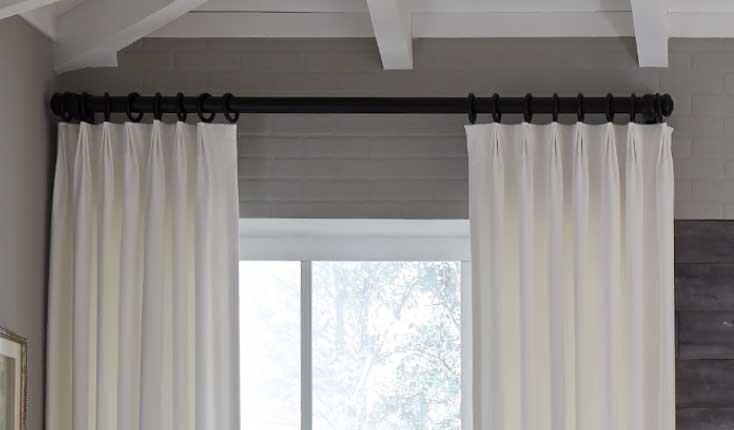
The words double and triple are used to define how many pleats you’ll see after the gathers are sewn. Double pleats are very popular, with two pleats that appear to create a small “V” shape. Triple is often considered more formal, as there are three pleats that fan out from each section of gathers, creating a “W” shape.
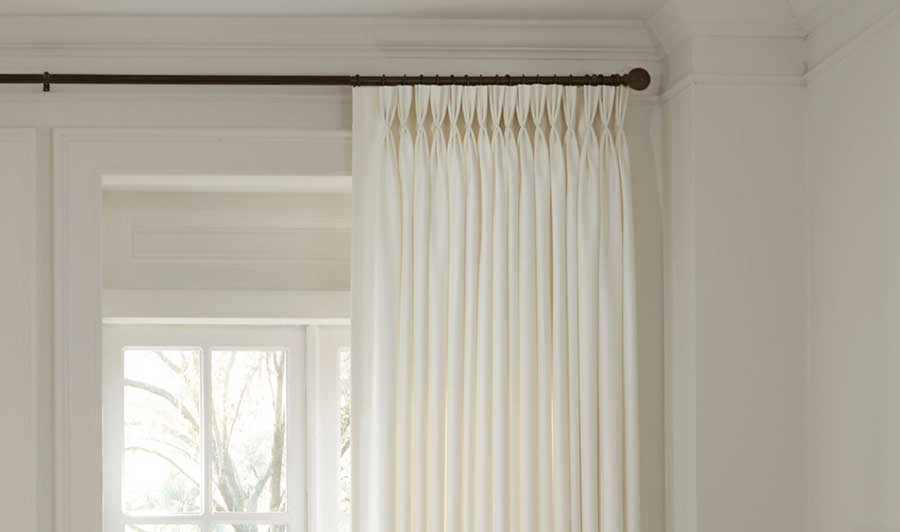
There is more fabric used to create triple pinch pleats than double pleats, which can result in more depth and fullness, where double pleats are less bulky at the window, due to using less fabric. In some cases, triple can also be more expensive than double due to the amount of fabric used to create the draperies.
Is pinch pleat different from euro pleat?
Yes, pinch pleat drapery is created with the pleats being gathered and sewn a few inches down from the top, while euro pleat drapes are sewn at the very top of the fabric, or half of an inch down, which is also referred to as an inverted pleat. The gathering and stitch of the fabrics is visible at the top, with the pleats becoming more open as they cascade down the window. This header style can be known to offer a more casual appearance, depending on the style of the fabrics used.
Which fabrics are most popular?
Double pinch pleat draperies are considered slightly less formal than triple pleats, best crafted with medium weight fabrics, such as cotton or linen. Popular fabrics for triple pleat drapery are velvets and other heavy-weight fabrics, which can include certain linens.
How does it compare to ripple fold or grommet?
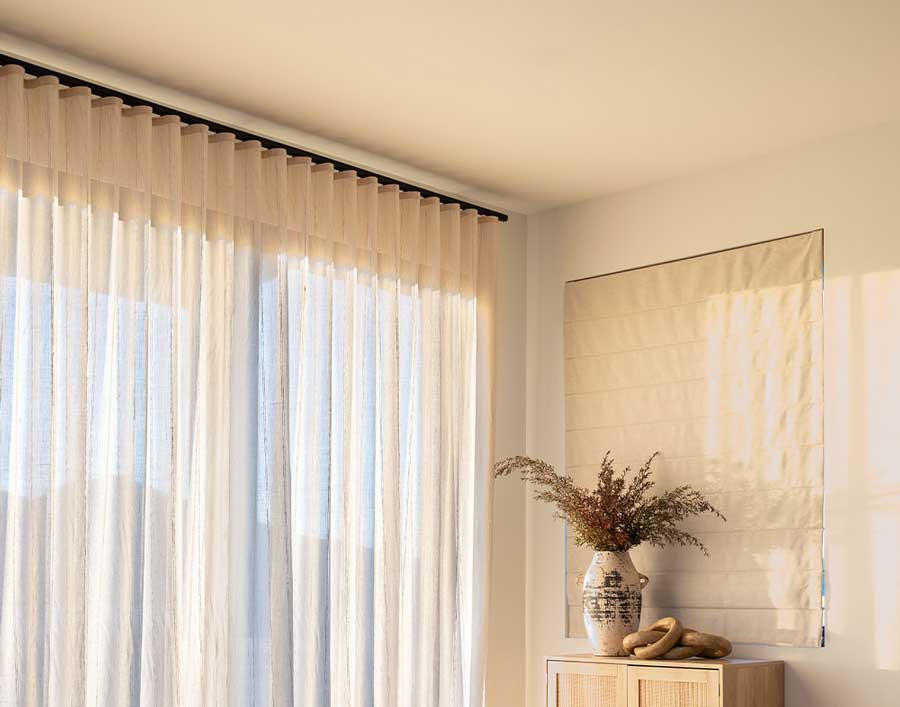
The header style you select offers a piece of the overall look, and it’s a deeply personal statement–one that only you can decide. Pinch pleat draperies are elegant and sophisticated, but they are not the only choices you have. Many homeowners find themselves considering all three types of the most popular header styles, which also includes ripplefold and grommet. Ripplefold is designed to move along a specialty track, keeping the soft, curved folds of the header style, appearing as if they are floating in place.
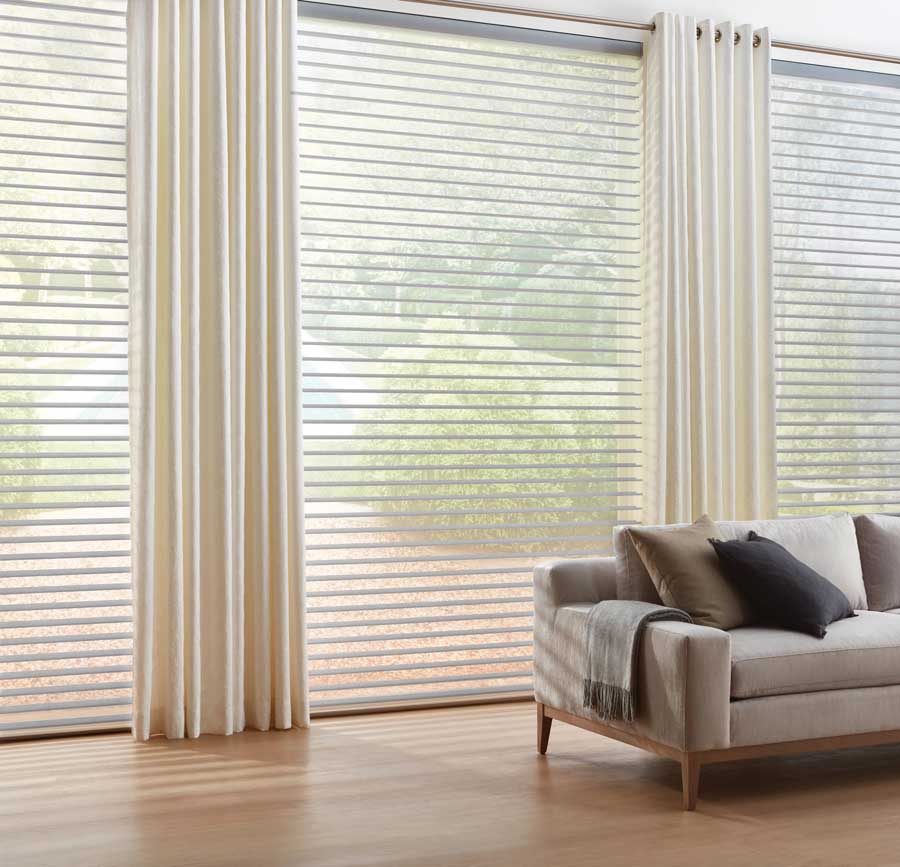
Grommet style draperies feature a round metal ring that slides along the drapery rod to open and close. These are less “trained” than pinch pleats or ripplefold, and depending on the fabric selection, may offer a more casual look. The metal rings showcase an additional design element–the metal of the rings should coordinate with the material of the rod.
The 10 Most Popular Pleat Styles
While most homeowners have seen the double, triple and euro pleat header styles, there are a number of other pleat styles you can choose to customize draperies.
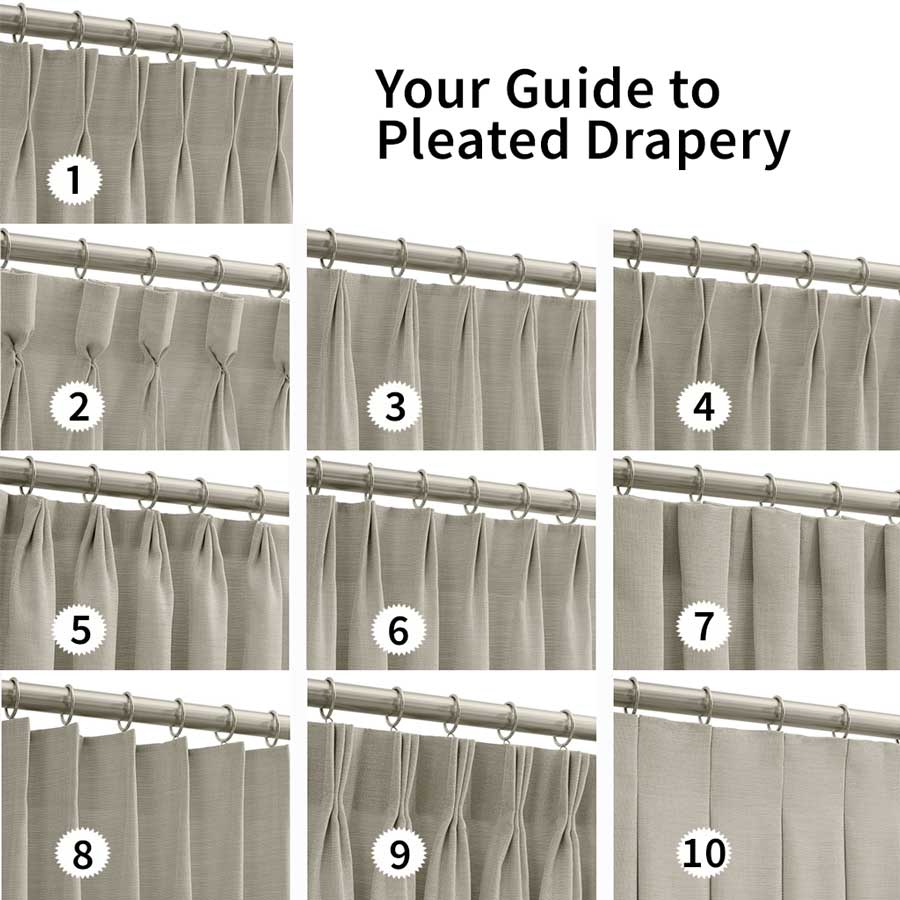
- Double Pinch Pleat: The fabric is tacked between 3-4 inches down from the top, forming a “V” shape above and below the gather. This is also known as a “two finger pinch pleat.”
- Goblet Pleat: Fabrics are gathered and structured to create a round shape, with the base of the shape tacked, forming a pleat that opens down the draperies. This has been referred to as a “cup-shaped pleat,” known to be more formal than other styles.
- Inverted Pleat: Fabrics are pinched at the top, being stitched together about a half inch down from the top, with multiple pleats fanning out down the drapery. This is similar to a euro pleat drapery header.
- Monarch Pleat: This is a version of the Double Pleat style. The fabrics are tacked 2 inches down from the top, forming a butterfly wing look, as the top and bottom of the pleat appear to mirror one another.
- Natural Pleat: This is similar to the inverted pleat, where the pleats are tacked at the top of the header and fan out down the drapery. This is less structured, offering a casual appearance.
- Olivia Pleat: This is a version of the inverted pleat, or euro pleat, with fabrics pinched and tacked near the top of the header. The Olivia Pleat from Carole Fabrics uses the double pleat concept, creating an upside down “V” shape that cascades down the drapery.
- Relaxed Pleat: This offers rounded, structured fabrics tacked at the back of the fabric, creating 3-4 inch loops in the header, which casually flow down the drapery, no pinching is visible on the front side. This is also referred to as a “box pleat.”
- Single Pleat: Structured fabrics are trained in a single pleat, starting at the top and continuing down the drapery.
- Triple Pleat: Fabrics are pinched and tacked 3-4 inches down from the top, forming a “W” shape above and below the gather. Sometimes referred to as a French Pleat, this is commonly known as a “three finger pinch pleat.”
- Tuxedo Pleat: A form of box pleat, or inverted pleat–due to the pleats being tacked at the back of the drapery–this header style is structured, commonly used for stationery panels.
Can Pinch Pleat Drapery Be Motorized?
Absolutely! Homeowners have embraced window treatment motorization, and we are happy to say that pinch pleat draperies are capable of being motorized with the Hunter Douglas PowerView® automation system. Control your smart drapes with a remote, app on your phone, or with a voice command to your smart home device.

Let’s Explore Draperies Together!
If you’re considering new draperies for your Florida home, we can help. Our At Home Blinds & Decor team members are the Fort Myers & Naples experts when it comes to designing a beautiful (and functional!) look at the window. Our showroom, located in Fort Myers, features the largest selection of fabric books for you to browse. Our window covering designers would be happy to guide you toward collections that fit the style statement and window solutions you are dreaming of. Come visit us, and then schedule your free design consultation.