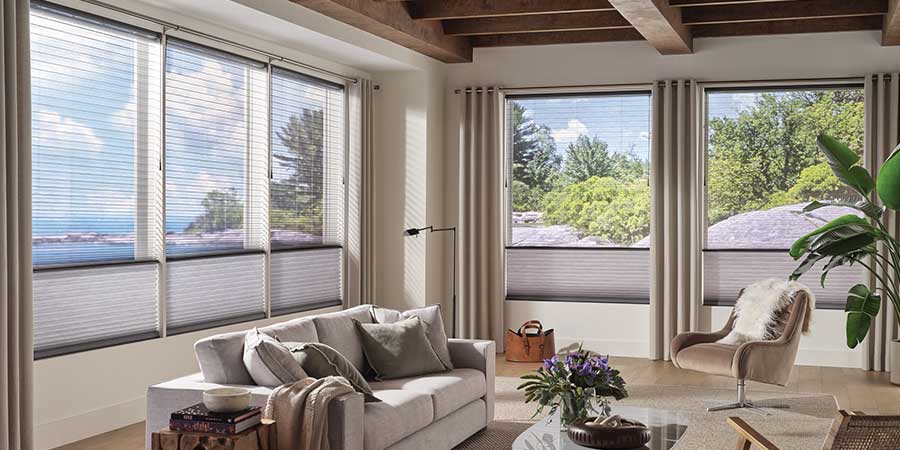
When it comes to window coverings that check all the boxes—style, efficiency and control—cellular shades are hard to beat. Their distinctive honeycomb construction helps insulate and protect the interior of your home while offering a beautifully organized look at the window. But today’s cellular shades can do much more than insulate. From changing the way natural light enters the room to covering specialty windows and glass doors, the right cellular shade features can help solve some of your biggest challenges at home.
So, which features matter most? Consider how you want your shades to manage light, privacy, comfort and everyday operation before choosing the right combination for your windows.
Start with the Cellular Design
The cellular structure is what sets these shades apart. Honeycomb-shaped pockets trap air at the window, creating an insulating barrier between your home’s interior and the glass. This can help reduce the impact of outdoor temperatures and make it easier to maintain a comfortable interior.
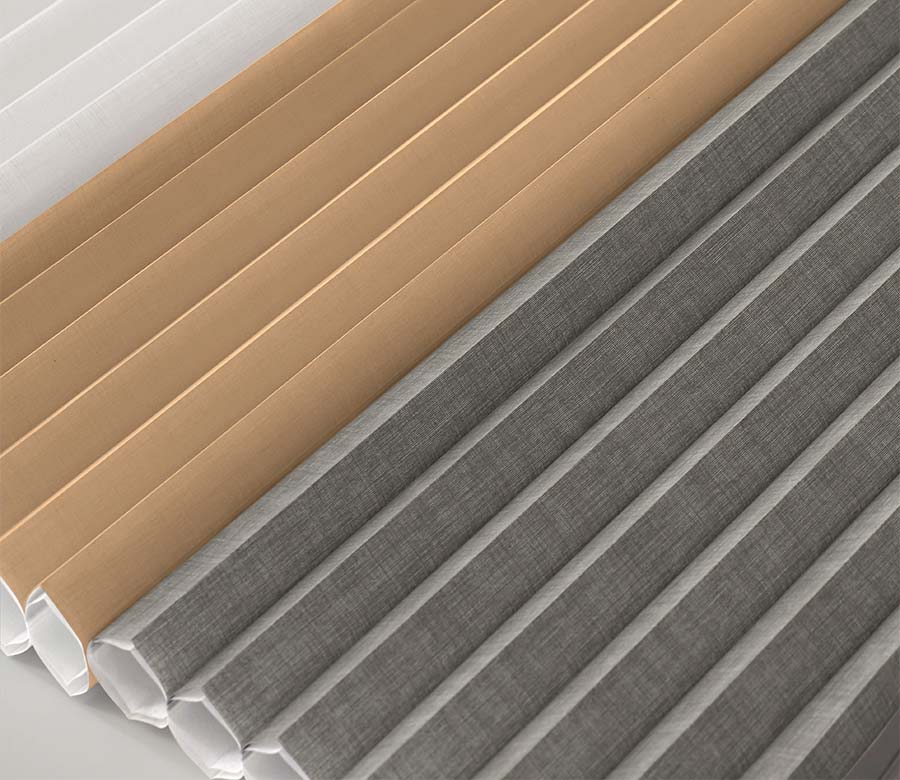
Cell construction, fabric and the fit at the window can all play a role in performance. If reducing heat transfer and improving interior comfort are high priorities, learn more about energy-efficient window treatments. For homeowners interested in Hunter Douglas’ premium cellular collection, you can also explore the full range of Duette® Honeycomb Shades.
Choose How You Want to Control Natural Light
One of the most important decisions you’ll make is how much light you want entering the room. Cellular shades are available in fabrics that range from softly filtering daylight to significantly darkening a space. Light-filtering fabrics are ideal when you want to soften intense sunshine while keeping the room bright. Room-darkening fabrics offer greater control for bedrooms, media spaces and other rooms where reducing incoming light is important.
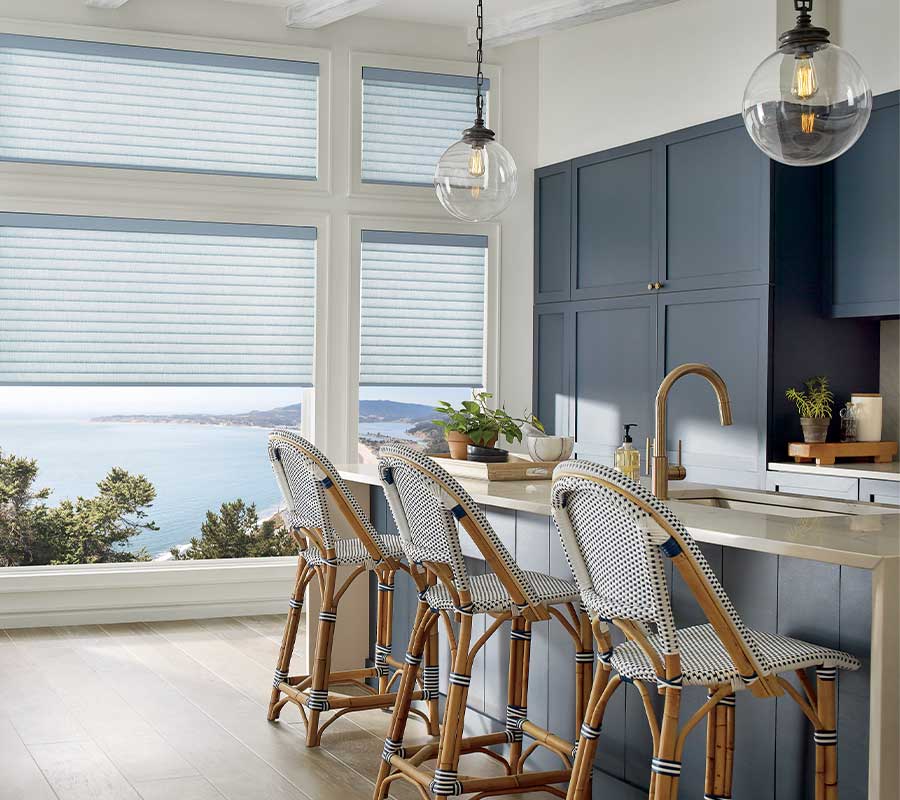
Some cellular shade configurations take light control even further. Dual shade systems combine two fabric opacities at one window, giving you the ability to transition between filtered daylight and greater room darkening. If controlling light for sleep or media spaces is your primary concern, explore our room darkening and blackout window treatments.
Balance Privacy & Daylight with Top Down Bottom Up
Sometimes you don’t want to cover the entire window. You just want privacy where you need it while still welcoming natural light into the room. That’s where Top Down Bottom Up operation becomes especially useful.
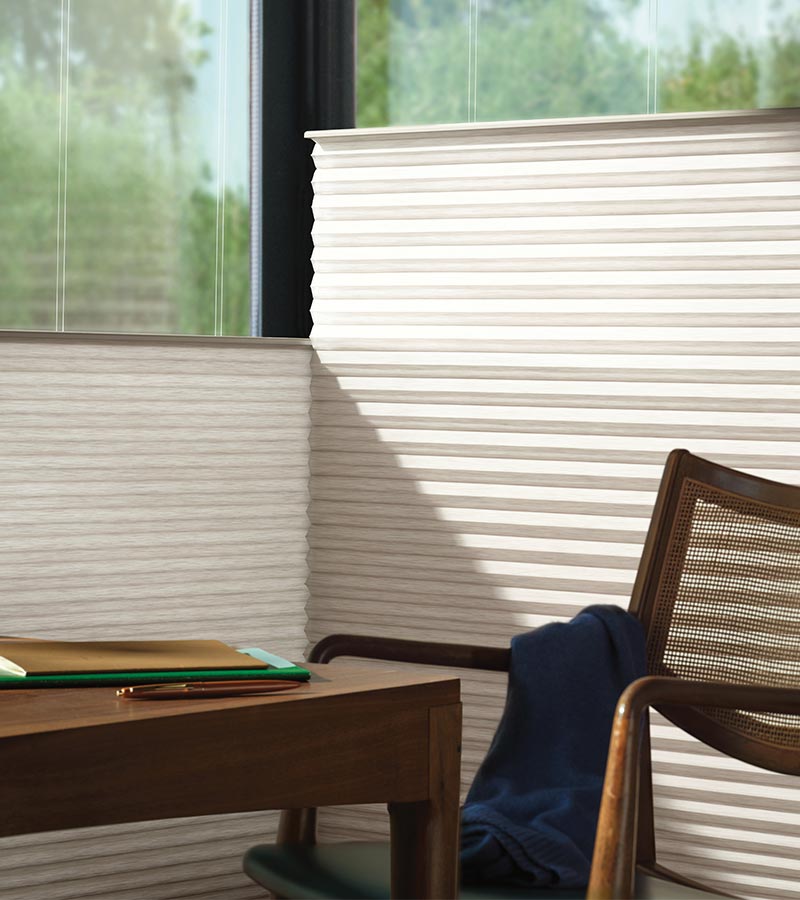
Instead of only raising a shade from the bottom, this feature lets you lower it from the top. Keep the lower portion of the window covered for privacy while opening the upper portion to the sky and incoming daylight. It’s a great option for bedrooms, bathrooms, street-facing rooms and other spaces where privacy and natural light need to work together. See how Top Down Bottom Up shades can help you customize privacy and light throughout your home.
Consider Cellular Shades for Doors & Specialty Windows
Cellular shades aren’t limited to standard rectangular windows. One of their most useful advantages is the ability to adapt to some of the trickier areas of your home.

Depending on the collection and configuration, cellular shades can be designed for specialty shapes, skylights and glass doors. This gives you the opportunity to coordinate window coverings throughout the home while still choosing an operating style that works for each opening.
What About Sliding Glass Doors?
For wide expanses of glass, cellular shades can turn sideways. Duette® Vertiglide™ uses the cellular structure in a vertical application that travels horizontally across sliding glass doors and large windows.
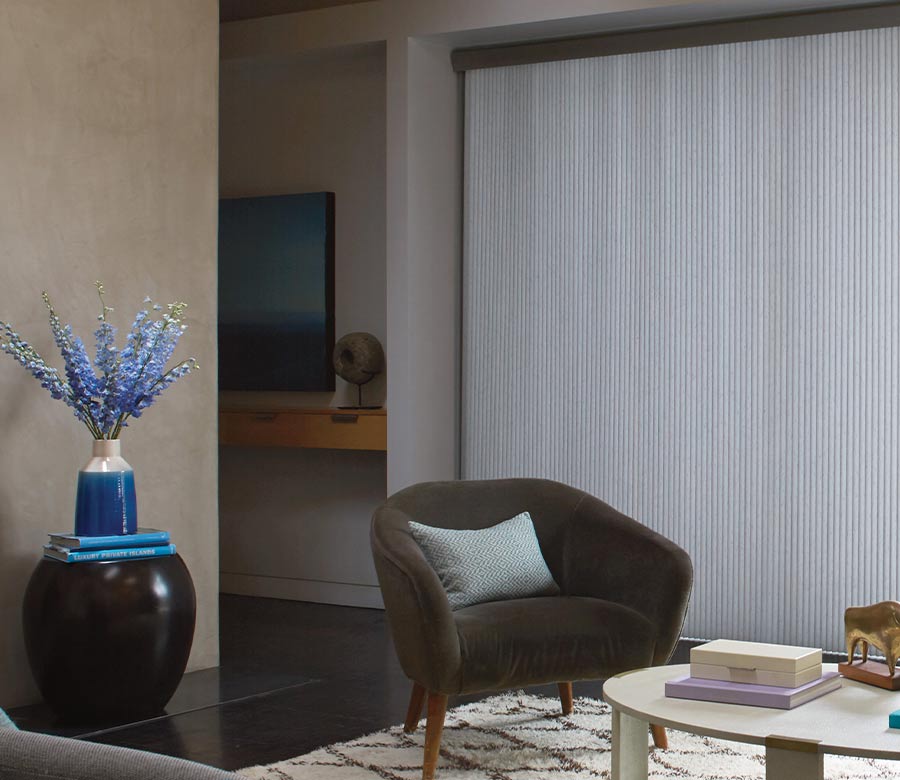
This makes it possible to carry the soft, streamlined appearance of cellular shades from your windows to large doors while maintaining easy access to the outdoors.
Make Everyday Control Easier
How you operate your shades is another feature worth considering. Cordless operation creates a clean, streamlined appearance, while motorization can make everyday adjustments almost effortless. With motorized blinds and shades, you can raise and lower compatible cellular shades with a remote, app or voice command. You can also create schedules so your shades adjust as sunlight changes throughout the day. This is especially helpful for tall or hard-to-reach windows, or simply when you want your home to manage light more automatically.

Pairing smart control with an insulating cellular shade can be particularly useful in Southwest Florida. Schedule shades to close before intense afternoon sunshine reaches the windows, then reopen them when conditions change.
Think Beyond the Traditional Honeycomb Shade
If you love the insulating cellular structure but prefer the clean operation of a roller shade, there’s another option to consider. Sonnette® Cellular Roller Shades combine a cellular fabric with rolling operation, allowing the shade to roll neatly into the headrail when raised.

It’s a good example of why choosing cellular shades isn’t simply about picking a color. Consider the appearance you want at the window, how you prefer the shade to operate and which functional features will make the biggest difference in the room.
Look for Features That Fit the Way You Live
Not every cellular shade feature will be important for every room. Think about the challenges you’re trying to solve and choose accordingly.
- For sunny rooms: Consider insulating construction and fabrics that help manage intense light.
- For bedrooms: Look at room-darkening fabrics, dual shades and enhanced light control.
- For street-facing rooms: Top Down Bottom Up operation can balance daylight and privacy.
- For hard-to-reach windows: Motorization makes frequent adjustments much easier.
- For specialty windows: Look for configurations designed for arches, angled windows or skylights.
- For French doors: A cellular shade can provide light control and insulation in a streamlined profile.
- For sliding glass doors: Vertical cellular shades can coordinate with horizontal shades elsewhere in the room.
What About Illuminated Cellular Shades?
Some of today’s most innovative shade features go beyond controlling sunlight. Aura® Illuminated Shades combine a window shade with built-in illumination, allowing the window itself to become another source of interior light after the shade closes.

Available with Sonnette®, Aura® Illuminated Shades let you close the window for privacy while adding adjustable light back into the room. The illumination can shift from cool, bright daylight tones to warmer evening light, helping the atmosphere transition along with the time of day.
Which Cellular Shade Features Are Right for You?
The best cellular shades aren’t necessarily the ones with the longest list of features. They’re the ones configured for the way you use your home. Maybe that means Top Down Bottom Up operation for privacy, room-darkening fabric for a bedroom, motorization for high windows or a vertical cellular design for sliding doors.
Our At Home Blinds & Decor team can help you compare fabrics, operating systems and cellular shade features to find the combination that fits your windows and your lifestyle. Schedule your free design consultation to get started.
