
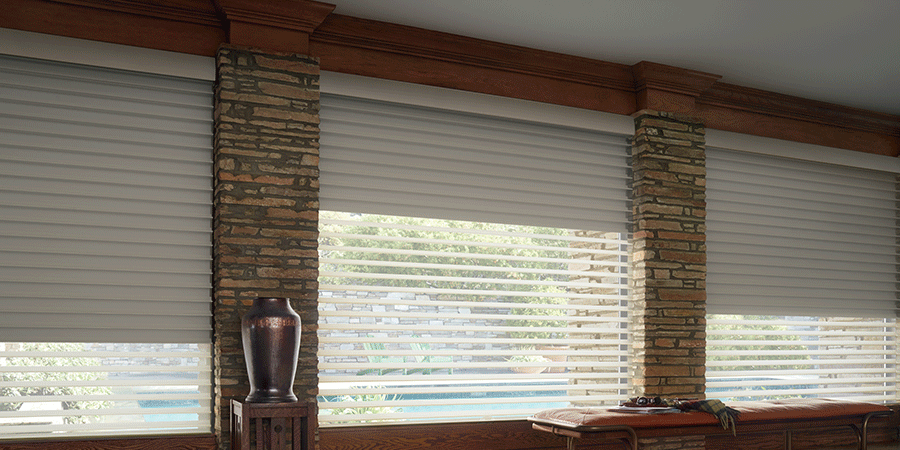
From family movie night in your living room to a good night’s sleep in your bedroom, what’s the one thing that gets in the way? If you’re like most people, you’d say, “Too much distracting light!” But you no longer have to struggle with these scenarios. From room darkening to blackout shades, you can create the right level of darkness for the way you live.
When most people think of room darkening window treatments, they think only of bedrooms. That’s a great place to start, but any room can benefit from this level of light control. Media rooms, home offices, nurseries, family rooms and bright south- or west-facing spaces can all become more comfortable with the right solution.
Room Darkening Shades
Let’s start by talking about room darkening shades. As implied by the name, these shades help darken a room by reducing the amount of light entering your space. But if complete and total darkness isn’t exactly what you’re looking for, no worries.
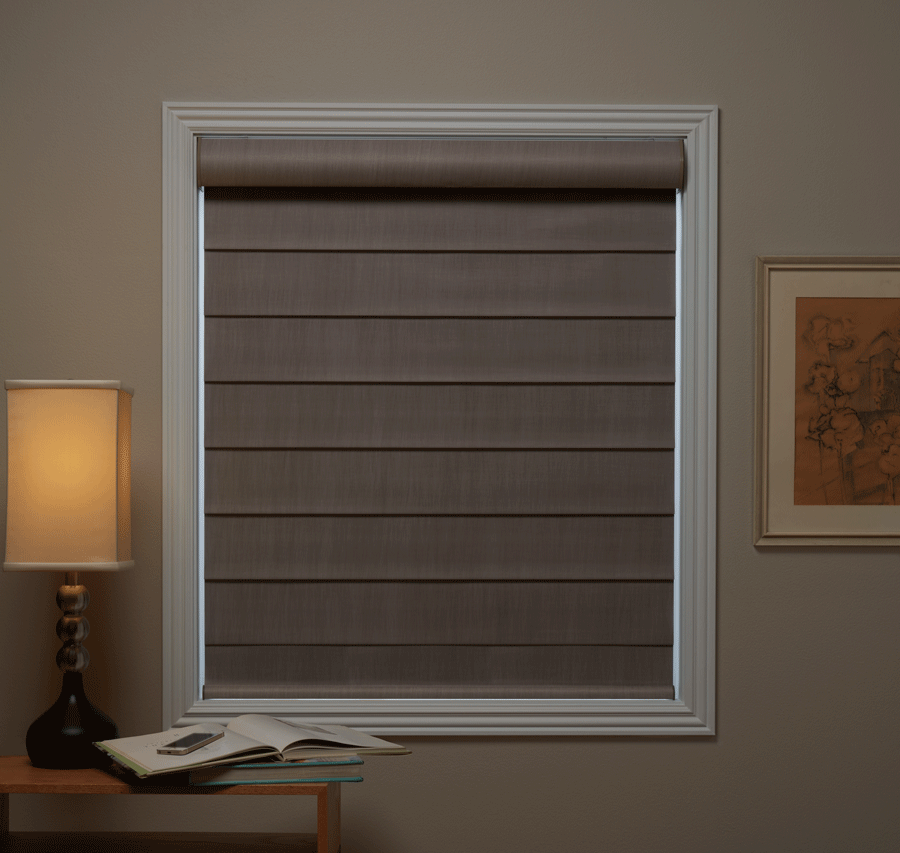
Depending on the fabrics you choose and how the shades fit inside your windows, you might still notice narrow light gaps along the sides. This is enough to darken the space and keep out distracting light, but it won’t create a pitch-black room during the day.
Blackout Shades
If room darkening shades don’t cut it for you, and you want complete darkness, blackout shades are the next level. Blackout shades are designed to block light from entering through the fabric, making them a great choice for bedrooms, nurseries, media rooms and any room where outside light is a problem.
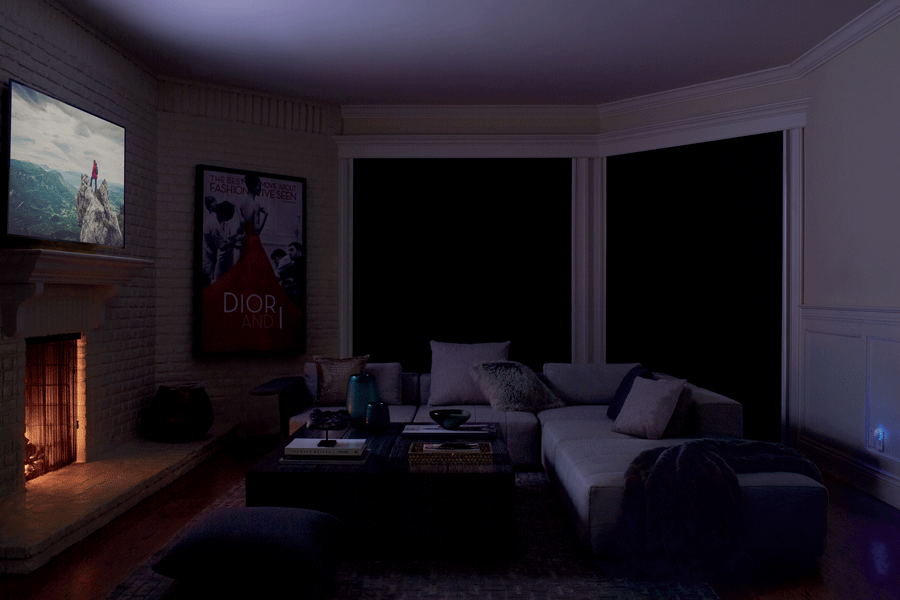
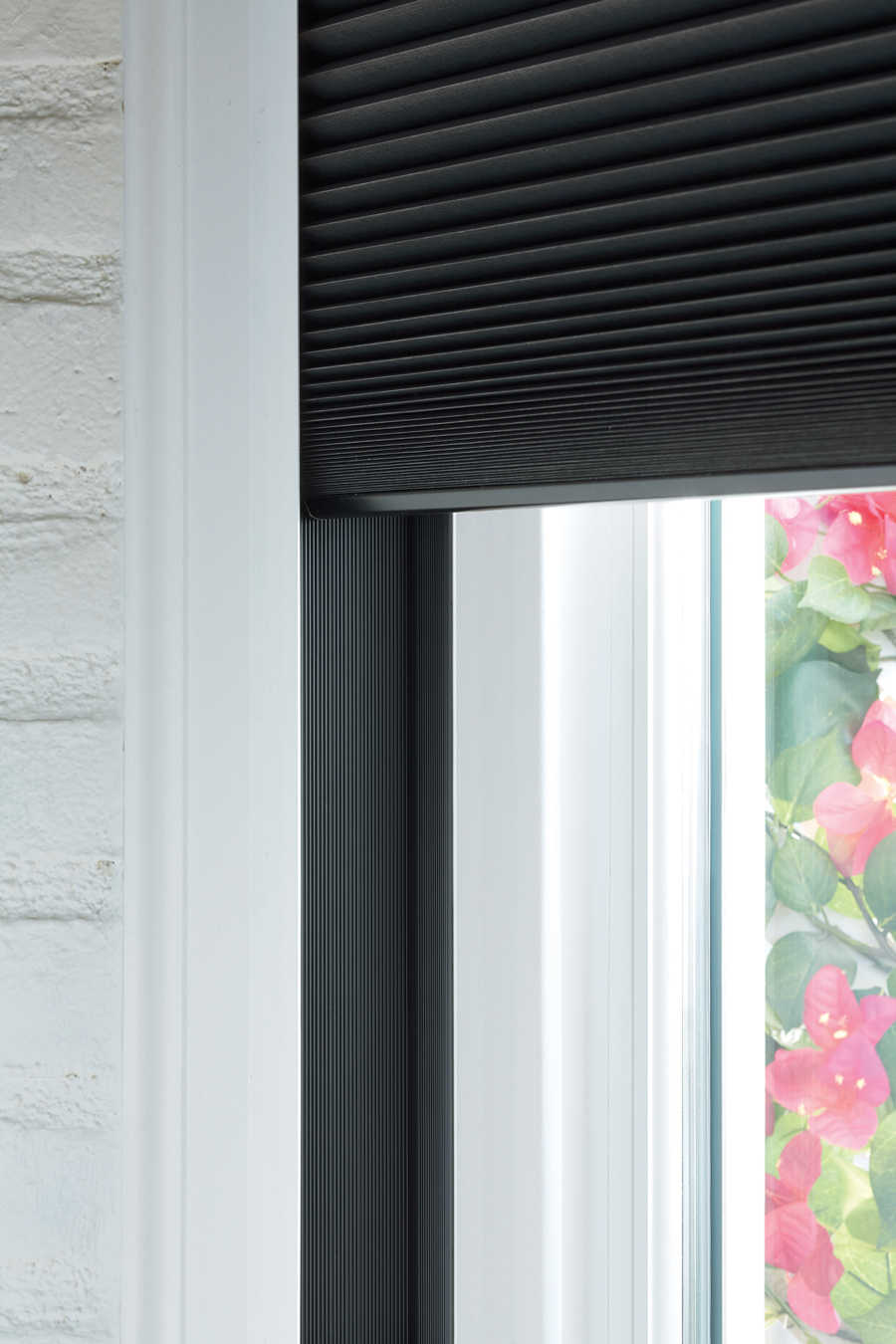
For the strongest blackout effect, fabric opacity matters—but so does the way the shade fits the window. Authentic blackout window treatments often use added design features, like side channels, to reduce light gaps and keep light from sneaking around the edges.
Room Darkening vs Blackout: The Main Difference
The biggest difference comes down to the amount of light blocked.
- Room darkening shades reduce light and glare, but may still allow a soft glow or light gaps.
- Blackout shades are designed to block as much light as possible for a darker environment.
Room darkening is often enough for living rooms, home offices and everyday light control. Blackout is best when darkness really matters—like sleep, movie watching or reducing intense sunlight during specific times of day.
Where Room Darkening and Blackout Shades Work Best
Different rooms need different levels of darkness. Some spaces benefit from soft room darkening, while others need stronger blackout control.
- Bedrooms: Better sleep, nap time and early bedtimes
- Media rooms: Reduced glare for movie night
- Home offices: Less screen glare during the workday
- South- and west-facing rooms: Relief from intense afternoon sun
- Family rooms: Flexible control for relaxing, entertaining or watching TV
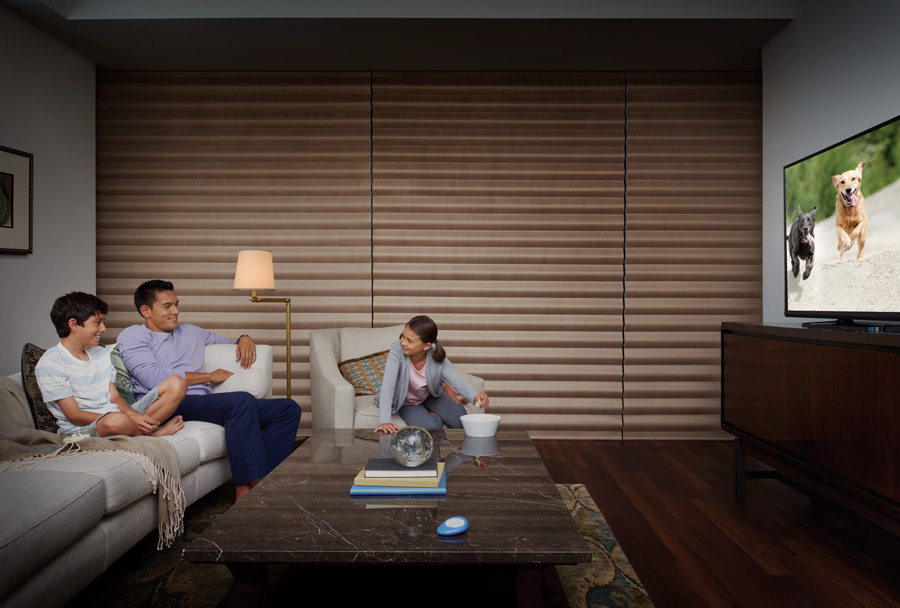
Fabric Opacity Makes a Big Difference
One of the most important room darkening details is fabric opacity. In order for a shade to block more light, the fabric must be opaque or include a room darkening liner. The liner helps prevent light from passing through the material.
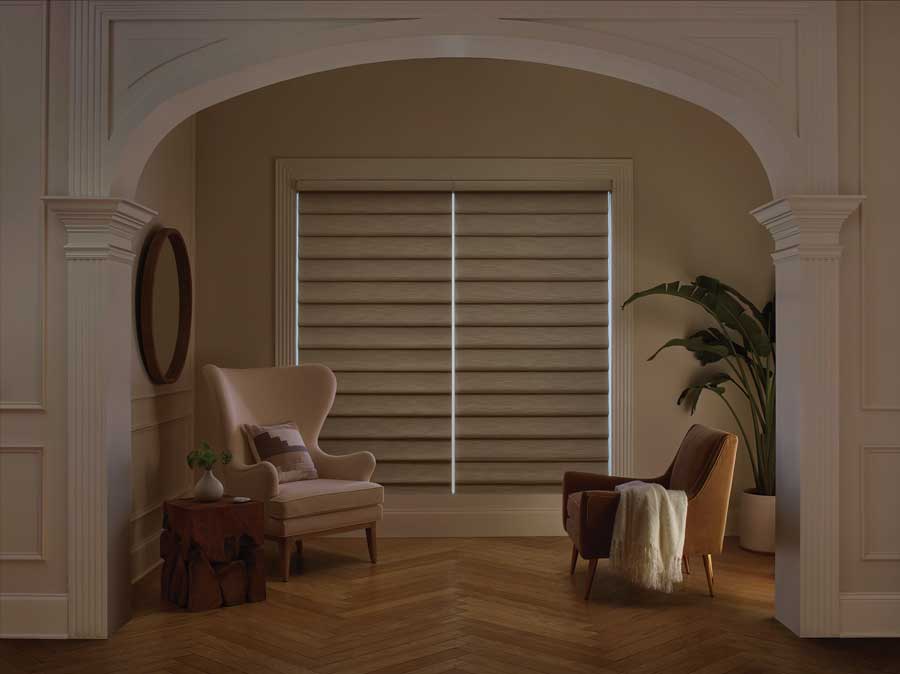
That’s why two shades can look similar but perform very differently. One may simply filter light, while another may dramatically darken the room. When choosing between room darkening and blackout, your fabric selection is one of the first decisions to make.
Light Gaps and Side Gaps
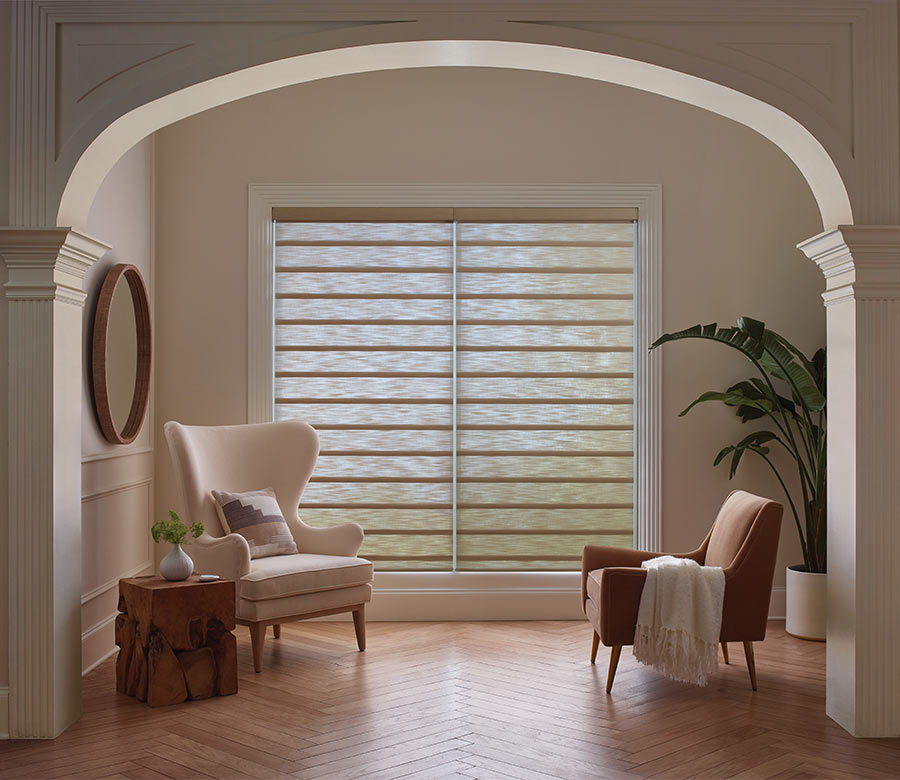
Have you ever heard of “light gaps” or “side gaps?” These describe the small areas of light that appear between the window frame and a closed shade. Sometimes these areas are completely fine. Other times, especially in bedrooms or media rooms, homeowners want to reduce them as much as possible.
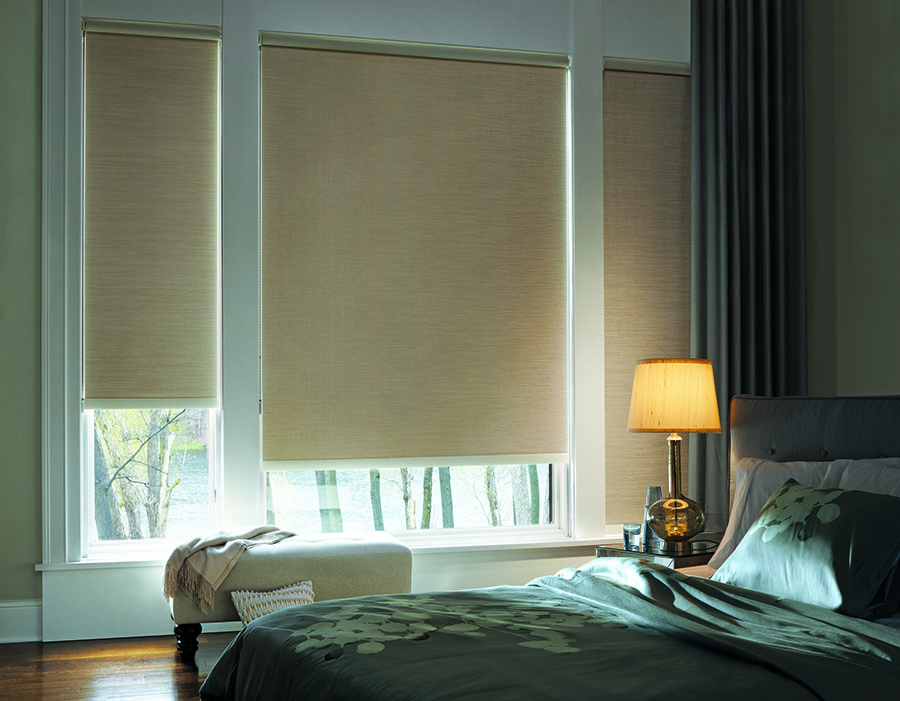
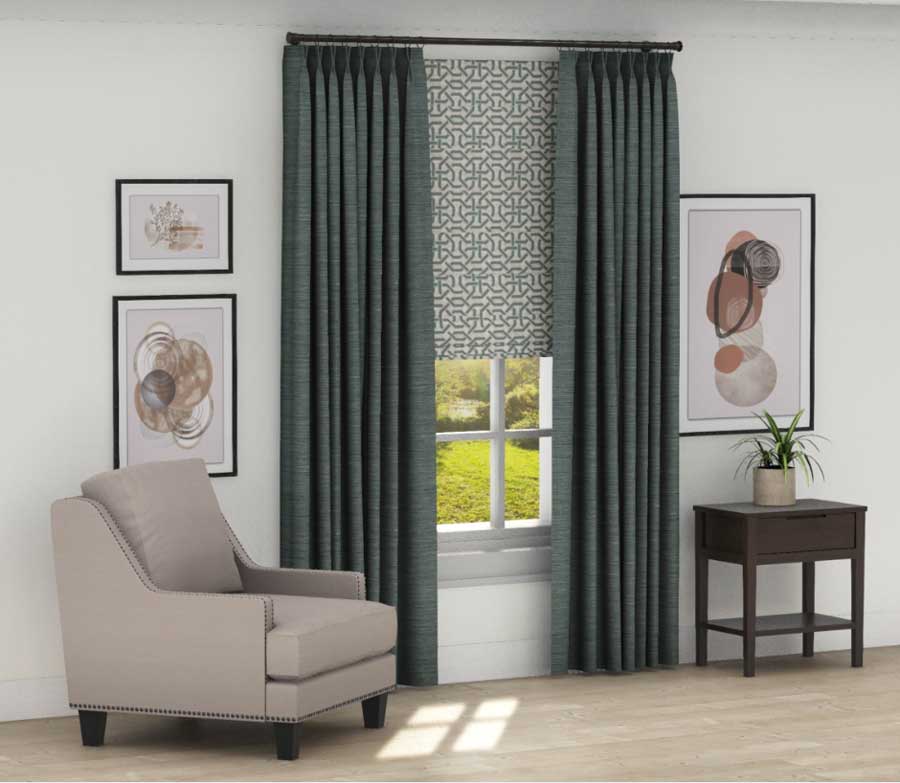
If you want a darker result, custom fitting matters. Drapery panels can help cover side gaps, while blackout systems with channels can dramatically reduce light leakage.
The LightLock™ feature, available with Duette® Honeycomb Shades, uses side channels to trap the shade and reduce incoming light. This is one of the best options when you want a true blackout effect.
Customizing the Level of Darkness
In this bathroom, the fabric is an opaque choice, blocking the light like a blackout shade. Because privacy was important, this family chose to mount the shades over the window frame, reducing light gaps along the sides.
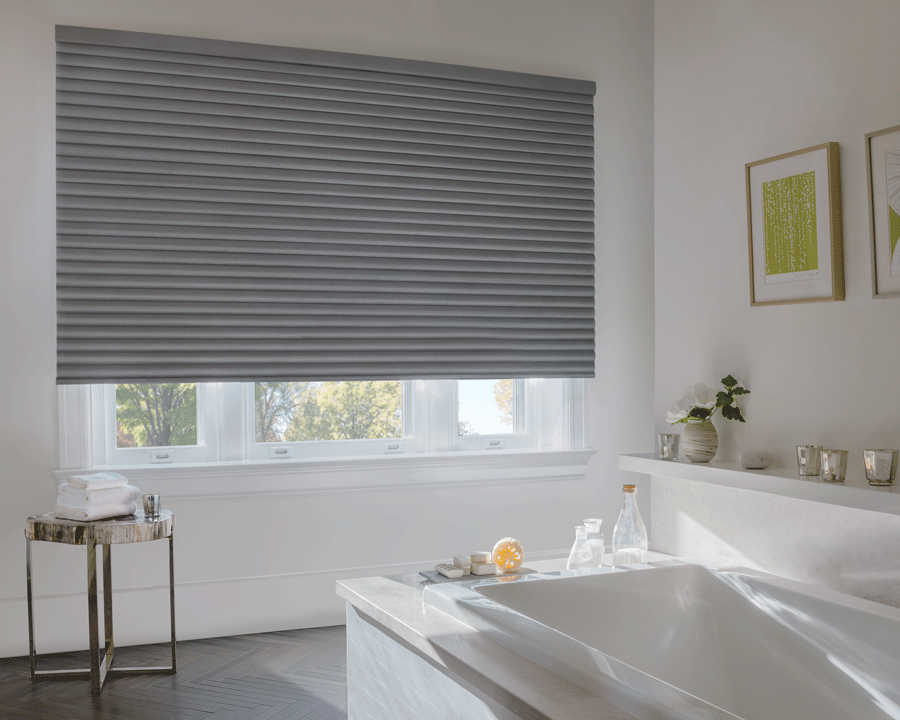
During the day, there may still be a slight glow between the shade fabric and the trim of the window, which makes the result feel more like room darkening than complete blackout. These are the details that make custom window treatments so valuable. You can decide how much darkness, privacy and flexibility you want in each room.
Dual Shades: Light Filtering and Room Darkening in One
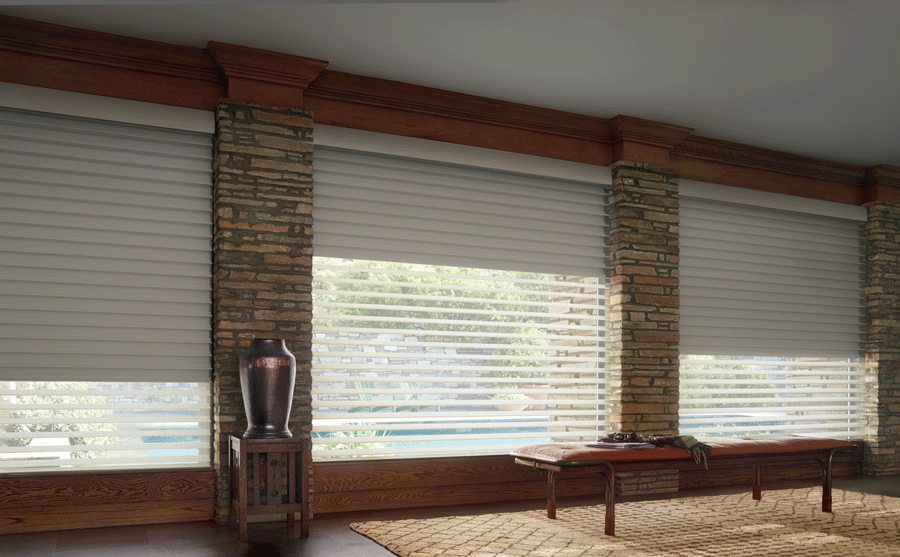
We get it. At times you need total darkness, and other times you don’t. If you want complete control over the amount of light your home is getting, dual shades may be the perfect match.
With dual shades, you get the best of both worlds. One shade filters natural light during the day, while a second room darkening or blackout shade can be lowered when you need privacy, darkness or better glare control.

This is especially useful in bedrooms, family rooms and rooms that need different lighting throughout the day.
Blackout Solutions for Better Sleep
Sleep is an important part of every household. And while healthy sleep habits are good for all of us, they’re easy to lose when life gets busy, seasons change or routines shift. The right blackout shades can help your family get back on track.
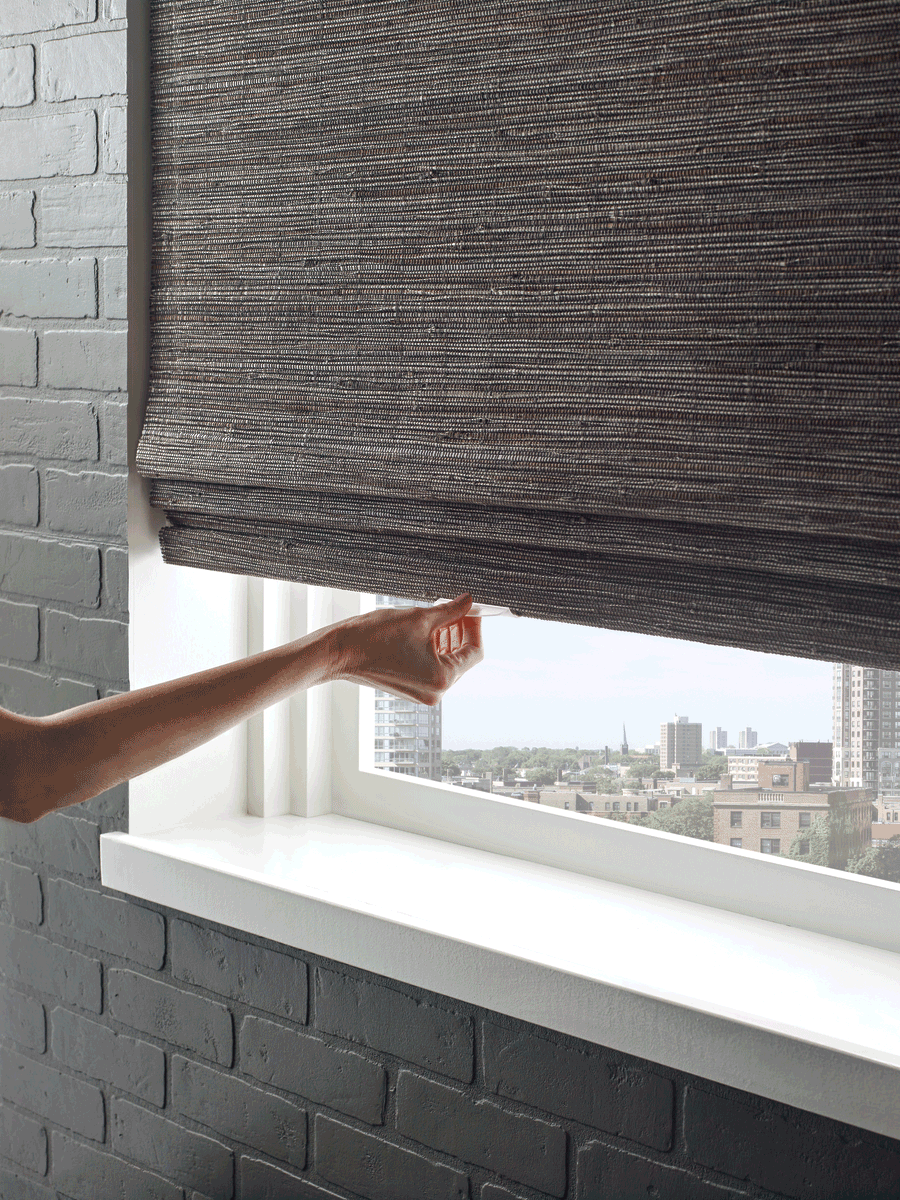
If you have little ones, you know how difficult nap time can be when sunshine is pouring through the windows. The best room darkening and blackout shades help transform bright bedrooms into calm, comfortable spaces for rest.
Daytime Light Control Still Matters
The best room darkening window treatments block light when you need darkness—but you don’t always want the room dark all day. That’s why daytime control is just as important.
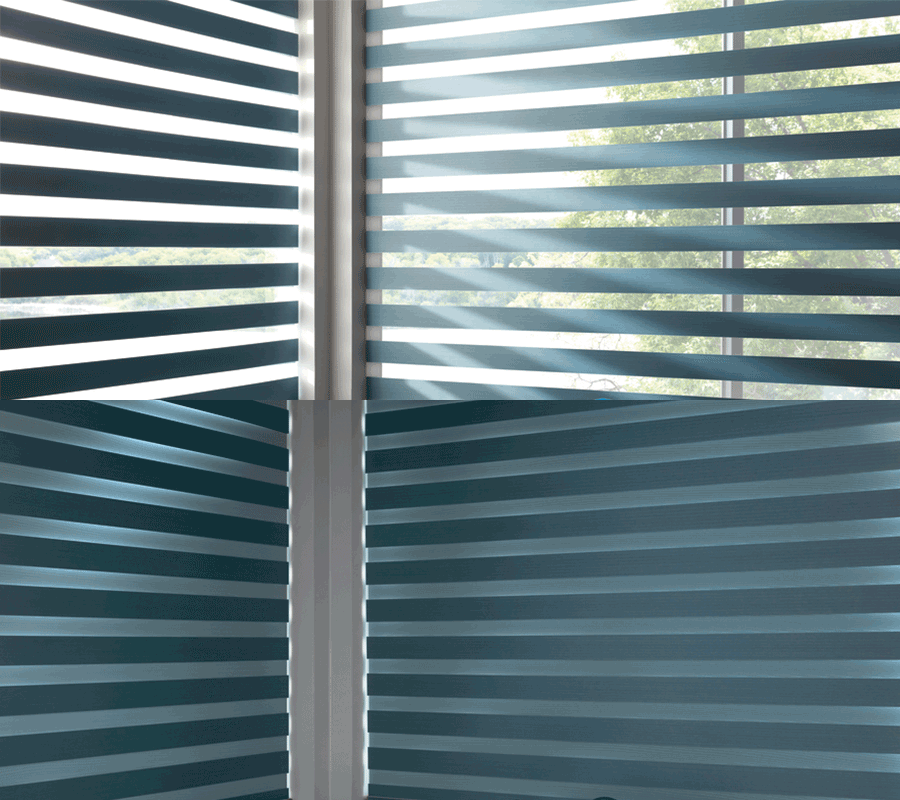
Top down bottom up shades are a smart choice for bedrooms and living spaces because you can allow natural light to stream across the ceiling while maintaining privacy below.

Other options, like banded shades or dual shades, can transition from filtered light to room darkening with a quick adjustment.
Motorized Room Darkening Shades
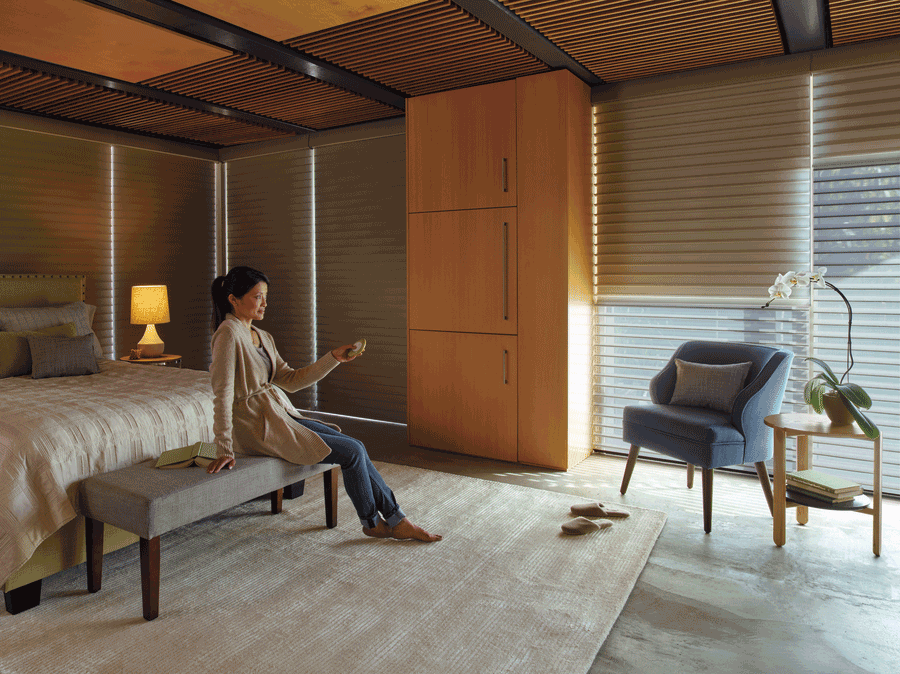
Changing light throughout the year can make it difficult to keep a consistent schedule. Summer nights stay brighter longer, while mornings can arrive earlier than you’d like. This is where motorized shades can help.
With PowerView® Automation, you can create schedules to open and close your shades automatically. Wake up with natural light in the morning, then let your shades lower in the evening as bedtime approaches. Even if you forget, your window treatments can keep your routine on track.
What About Shutters?
Shutters are also a solution to consider. They are opaque and will block a large amount of light. But what about the small amount of light that can come through the closed louvers?
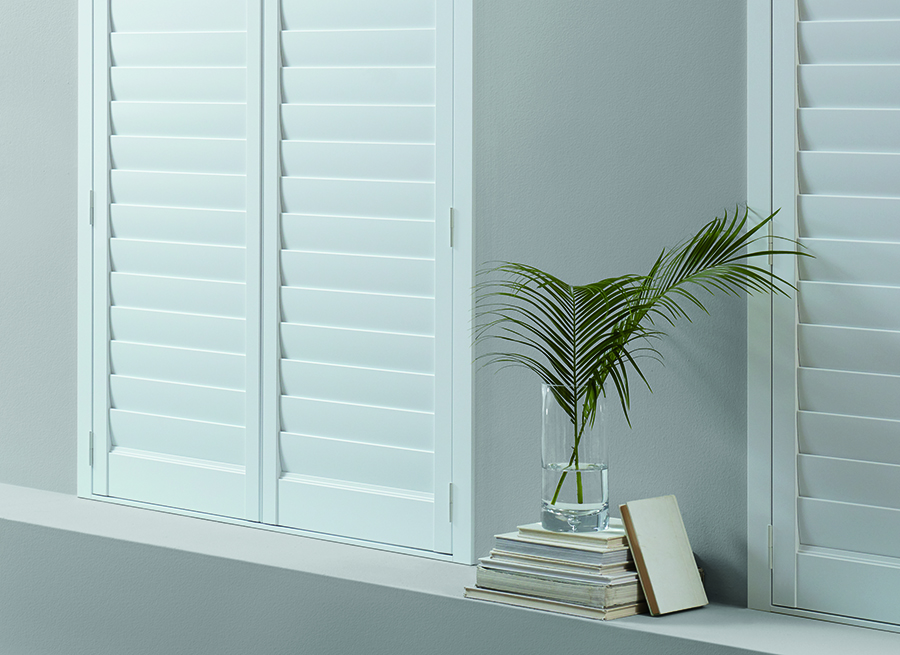
A clean close on your shutters may still allow a subtle glow, which can give your space a soothing environment. This can be great for keeping out light for an afternoon movie or sleeping in on the weekends, but it may not create the same blackout effect as shades with side channels.
Which Room Darkening or Blackout Shades Are Right for You?
The right choice depends on how dark you want the room, when you need light control and how the room is used. Bedrooms and nurseries may call for stronger blackout solutions. Living rooms and offices may only need room darkening or glare reduction. Media rooms may need the highest level of darkness for movie nights.
If you’re still comparing options, start with our room darkening solutions page for product ideas, then talk with a designer about the best fit for your home.
Let Us Help
Our team here at At Home Blinds & Decor is here to help you with all your window covering needs. Whether you’re interested in room darkening shades, blackout shades, dual shades or motorized light control, we can help you find the right solution for your space.
Contact us to schedule a free in-home consultation.
